
How Jacksonville Rebuilt Itself From Ashes
At 12:30 in the afternoon on May 3, 1901, some sparks from a chimney drifted onto a rack of drying Spanish moss outside the Cleveland Fibre Factory, a mattress-stuffing plant near Beaver and Davis Streets. It hadn't rained in weeks. The wind was up.
Eight hours later, Jacksonville didn't exist anymore. Not the Jacksonville anyone had known that morning, anyway.
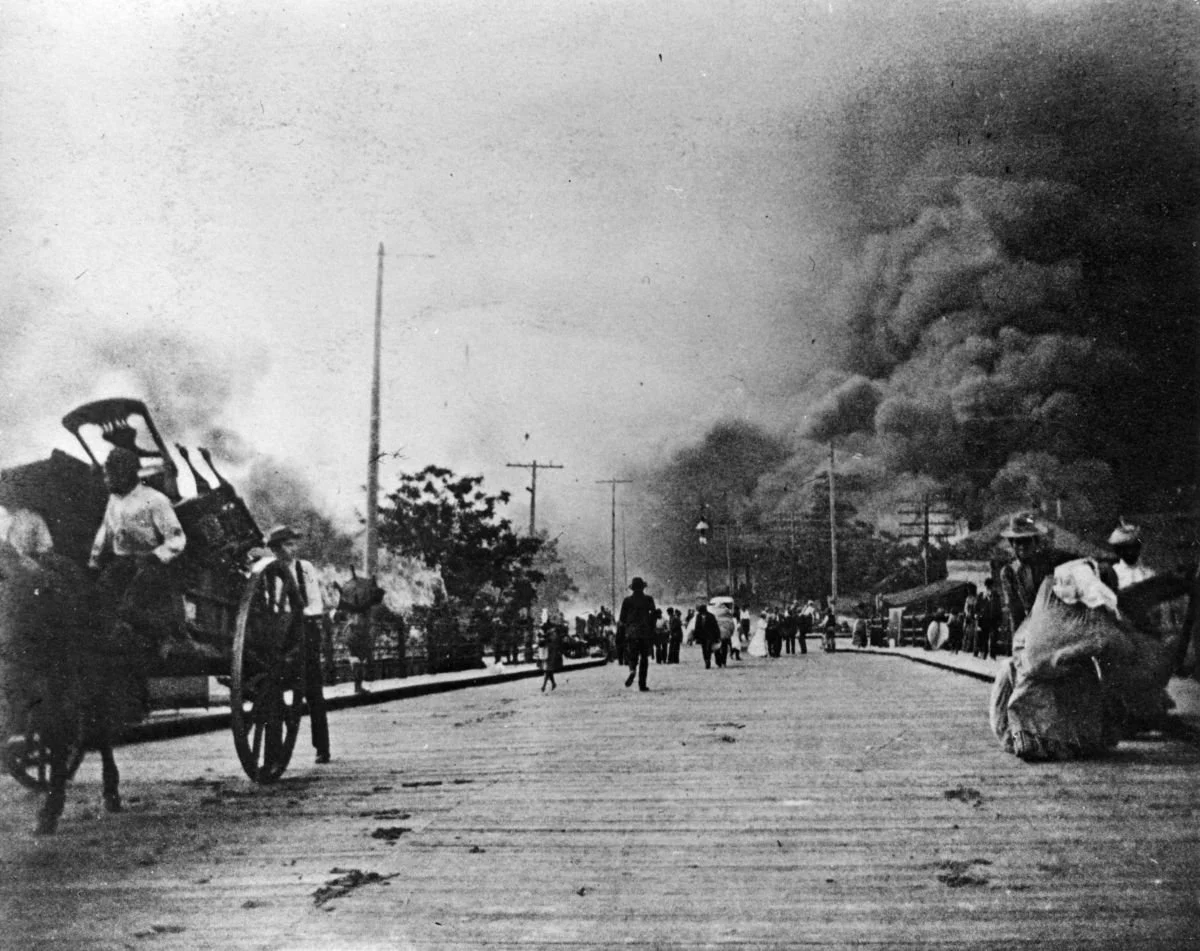
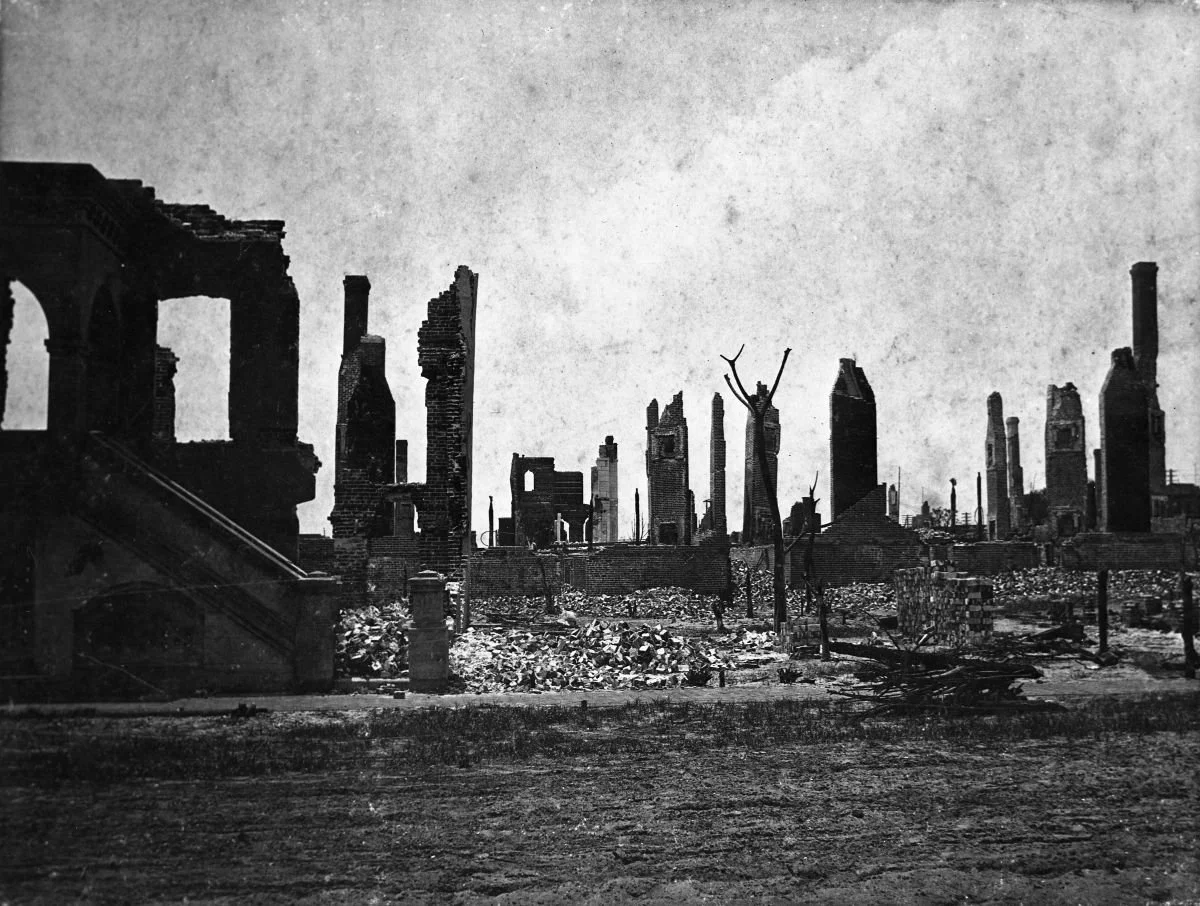
The fire tore east across downtown, through a city built almost entirely of wood with wood-shingle roofs, and there was nothing to stop it. Bucket brigades failed in minutes. By the time it finally burned itself out against Hogan's Creek and the St. Johns River — the only two things in its way it couldn't cross — it had destroyed 146 city blocks and 2,368 buildings. Ten thousand people were homeless. Seven were dead. Smoke was visible from Savannah, Georgia, ninety miles away.
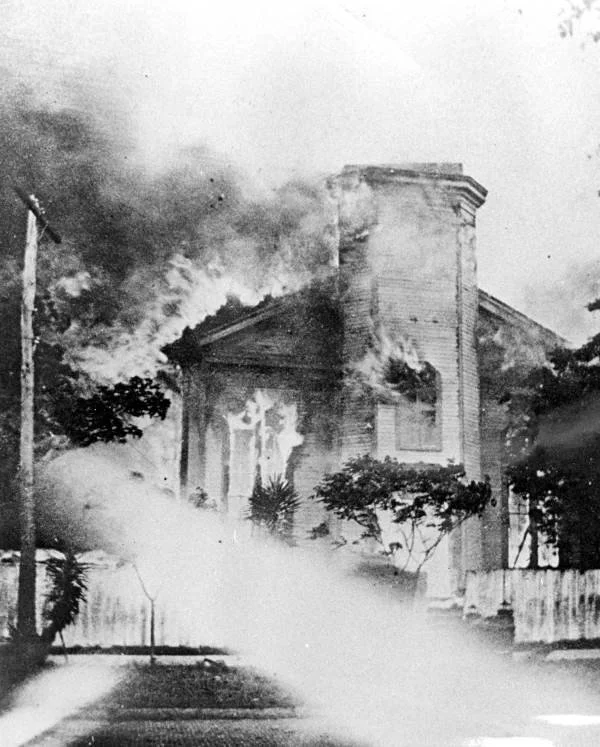
A Methodist church engulfed in flames, May 3rd, 1901
State Archives of Florida
It remains the third-largest urban fire in American history, behind only the Great Chicago Fire and the 1906 San Francisco fire. For a city Jacksonville's size, at that moment, it was close to total. The Board of Trade's president said it plainly the next day: nothing but a barren waste remains.
Governor William Jennings declared martial law and sent in the state militia to keep order in the ruins. One of the few things left standing downtown was the Confederate monument in Hemming Park — everything around it was gone.
Here's the part that actually matters, though, and it's the part most retellings skip past: what happened next.
Jacksonville didn't rebuild slowly, and it didn't rebuild the same. Within a decade, the city had used its own destruction as a blank canvas. A young architect named Henry John Klutho read about the fire in the New York Times, saw an entire downtown that needed designing from scratch, and moved south. He brought with him the Prairie School style — the same architectural movement associated with Frank Lloyd Wright — and built it into the bones of the new Jacksonville. The St. James Hotel rose from the ashes as one of the largest buildings in the country when it opened in 1911. It still stands today. You'd know it as City Hall.
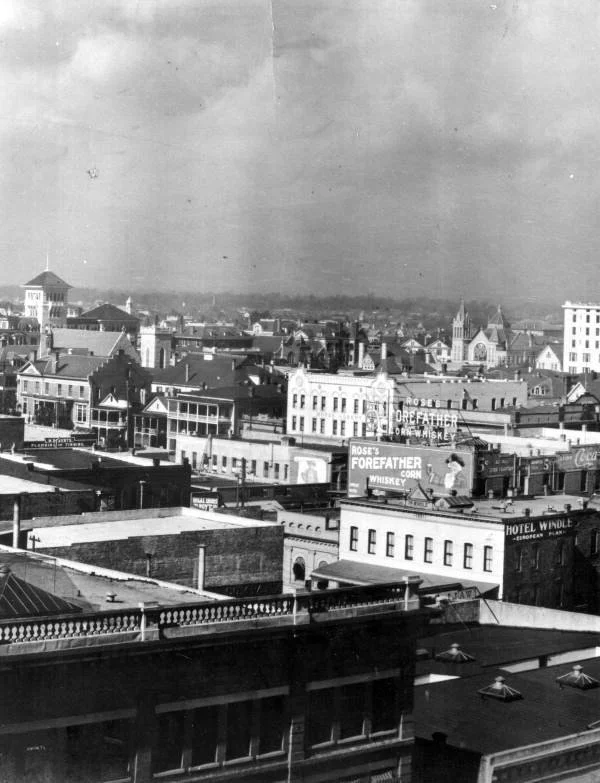
Jacksonville, 1909.
Eight years after the Great Fire, the city was already rising again.
That's the real story underneath "New Jacksonville," the phrase the city used for itself in the years after 1901: not a slogan, but a literal fact. This city has already done the thing people ask it to do now — burn down the old assumptions about what it could be, and build something better in the space that's left.
We think about that a lot. It's most of the answer to the question we keep asking.
WHY NOT JACKSONVILLE?
